
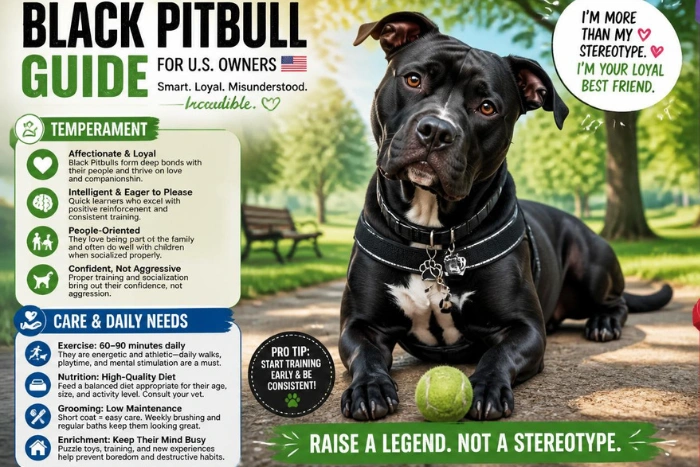




A black pitbull is a pit bull-type dog with a black coat, not a separate breed. The label may describe several related breeds or mixed-breed dogs in the United States. Coat color alone does not determine a dog’s personality, health, or suitability for your household.
| Key fact | What U.S. owners should know |
| Separate breed? | No. The term describes coat color on a pit bull-type dog. |
| Possible underlying breed | American Pit Bull Terrier, American Staffordshire Terrier, related breeds, or mixes |
| Recognition | UKC recognizes the American Pit Bull Terrier. AKC recognizes the American Staffordshire Terrier but not a breed named simply “Pit Bull.” |
| Typical coat | Short and smooth, with solid black or black-and-white patterns |
| Exercise | Many pit bull-type dogs need about 45–60 minutes of daily activity. |
| Grooming | Short coats usually need simple brushing and occasional bathing. |
| Health concerns | Allergies, hip dysplasia, cataracts, and obesity deserve attention. |
| U.S. ownership checks | Review local rules, housing policies, and insurance terms before adopting. |
Direct answer: A black pit bull is not a separate dog breed. The name usually describes a pit bull-type dog with a black coat. That dog may be an American Pit Bull Terrier, a related breed, or a mix. Exercise, training, socialization, veterinary care, and local U.S. rules all matter.
Key Takeaways
- Black coloring does not create a separate breed or a special temperament.
- Individual dogs differ because of genetics, socialization, training, health, and past experiences.
- These athletic dogs generally need daily physical activity and mental work.
- U.S. owners should check landlord, HOA, municipal, and insurance policies before adoption.
- Responsible adoption should focus on the individual dog, not coat color alone.
What Is a Black Pitbull?

The phrase describes an appearance rather than a single standardized breed. In American usage, “pit bull” can cover several dogs with related ancestry or similar physical traits. Black coats can therefore appear on dogs with different pedigrees, sizes, and individual characteristics.
Black PitBull breed registries also use more precise terminology than everyday conversation. The United Kennel Club recognizes the American Pit Bull Terrier as its own breed. The American Kennel Club, by contrast, recognizes related breeds such as the American Staffordshire Terrier.
That distinction matters when researching care advice or adopting a dog. A shelter label based on appearance may not establish exact ancestry. Appearance-based breed identification can also be unreliable, especially with mixed dogs.
Black Pitbull Temperament and Family Life
Color does not tell you whether an individual dog will be calm, energetic, social, fearful, or reactive. Temperament develops through several influences, including genetics, early experiences, socialization, health, and handling. A responsible evaluation should therefore focus on the individual animal.
Many pit bull-type dogs form close relationships with their households. PetMD describes them as intelligent, people-focused dogs that can respond well to consistent training. Proper supervision around children remains sensible for every powerful, energetic dog.
Compatibility with other animals also requires individual assessment. The UKC breed standard notes that some dog-directed aggression can occur in American Pit Bull Terriers. Controlled introductions, secure handling, and close observation are therefore useful precautions.
Exercise, Training, and Socialization
These dogs often combine considerable strength with substantial energy. PetMD recommends roughly 45 minutes to one hour of daily exercise for pit bull-type dogs. Walks, games, nose work, obedience practice, and structured play can provide useful outlets.
Start training with clear routines and reward-based methods. Praise, food rewards, and play can reinforce behaviors you want repeated. Short sessions also help prevent boredom while building useful household skills.
Early socialization should expose a puppy to ordinary sights, sounds, surfaces, people, and controlled situations. Adult rescue dogs can also learn new routines at a pace that suits them. The goal is confidence and safe behavior, not forced contact with every person or animal.
Coat Care and Grooming
A short black coat is generally easier to maintain than a long or curly coat. Regular brushing removes loose hair and helps owners notice skin changes early. PetMD recommends routine brushing and bathing when needed rather than frequent clipping.
Black coats can also make dandruff, redness, or thinning areas easier to notice under strong light. Persistent itching, hair loss, redness, odor, or skin lesions deserve veterinary attention. Allergies are among the health concerns reported in this group.
Owners comparing grooming needs across dog types can also read WatchingHub’s Maltipoo grooming and haircut guide. That breed requires much more coat maintenance than a short-haired pit bull-type dog. The comparison shows how strongly coat texture changes everyday grooming demands.
Health Problems Owners Should Watch
No coat color guarantees good or poor health. Health risks depend more on ancestry, breeding practices, body condition, age, and veterinary care. A veterinarian can create a preventive plan for each individual dog.
PetMD identifies allergies and hip dysplasia among conditions seen in pit bull-type dogs. Cataracts and obesity are also discussed in its current veterinary-reviewed breed guidance. Maintaining an appropriate weight can reduce unnecessary joint strain.
Routine care should include vaccinations, parasite prevention, dental care, and regular examinations. Sudden limping, persistent itching, vision changes, or major weight changes deserve professional attention. Online breed information cannot replace an examination of your own dog.
U.S. Laws, Housing, and Insurance
American owners face an issue that many basic breed guides overlook. Rules affecting pit bull-type dogs can differ by municipality, landlord, housing association, and insurance company. Checking those restrictions before adoption can prevent difficult surprises later.
Breed-specific legislation refers to local rules that regulate or restrict dogs identified as certain breeds or types. The ASPCA notes that pit bull-type dogs are frequently included in these policies. Always verify exact requirements with the current local authority.
Insurance deserves a separate check. Some U.S. homeowners and renters insurers restrict coverage for certain dog breeds or evaluate individual bite history. Rules also vary by state and insurer, so owners should read their policy terms directly.
| Before adopting | What to verify |
| City or county | Current animal ordinances and licensing rules |
| Rental property | Written pet and breed policies |
| HOA or condo | Association restrictions |
| Insurance | Dog-liability exclusions or underwriting requirements |
| Household | Time for exercise, supervision, and training |
| Veterinary care | Access and expected routine costs |
Are Black Dogs Harder to Adopt?
You may encounter claims about “black dog syndrome,” meaning black dogs supposedly remain in shelters longer. Research does not show a simple universal effect based on coat color. A study using data from two U.S. shelters found no significantly longer time to adoption for black dogs.
The same research found other characteristics could matter more in those shelters. Age and breed grouping were more consistent predictors of outcomes in that dataset. Shelter conditions and local adoption patterns can still differ elsewhere.
This distinction matters because stereotypes can distract adopters from the individual animal. Meet the dog, ask about observed behavior, and review available medical information. A glossy black coat should be neither a reason to adopt nor a reason to reject a dog.
Adoption or Breeder: What Should You Look For?
Shelters and rescue groups can be strong options for people seeking adult dogs or puppies. Ask staff about behavior they have observed in kennels, foster homes, walks, and introductions. Those observations can be more useful than assumptions based on appearance.
If you use a breeder, avoid paying extra simply because black coloring is advertised as unusually special. The color does not create a separate breed with its own temperament. Responsible breeding decisions should prioritize health, stable behavior, appropriate structure, and transparent records.
Prospective owners should also consider lifestyle before choosing a particular dog. An energetic, strong dog needs time, secure equipment, exercise, and consistent household rules. Waiting for a suitable match is better than choosing mainly from a photograph. Elsewhere on the site: Brindle Pitbull Guide for U.S. Owners.
Is a Black Pitbull Right for Your Household?
This dog may suit someone who enjoys regular activity and structured training. Owners also need enough time for companionship, supervision, and veterinary care. Confirm housing and insurance conditions before bringing the dog home.
Families should evaluate the specific animal rather than relying on broad breed claims. Ask how the dog responds to handling, visitors, other animals, new surroundings, and alone time. A qualified trainer or behavior professional can help when concerns appear.
For more animal content, browse the WatchingHub Pets section. You can also return to the WatchingHub home page for newly published guides. Responsible ownership starts with choosing a dog whose needs fit your household.
Frequently Asked Questions
Is a black pit bull a separate breed?
No, the phrase primarily describes a black-coated pit bull-type dog. The actual dog may have American Pit Bull Terrier, American Staffordshire Terrier, related, or mixed ancestry. You can’t always determine exact heritage from appearance alone.
Are black-coated pit bull-type dogs rare?
A dark coat does not indicate a separate rare breed. Black is one of the coat colors seen among dogs within the broader pit bull-type group. Buyers should be cautious about paying large premiums based only on claims of rare coloring.
Are they good family dogs?
With suitable training, exercise, socialization, and supervision, some can fit well in family households. PetMD describes properly raised pit bull-type dogs as potentially affectionate family companions. Individual temperament and household circumstances remain more important than coat color.
How much exercise do they need?
Many need roughly 45 to 60 minutes of physical activity each day. Individual needs depend on age, health, energy level, and veterinary advice. Mental activities and training can complement walks and physical play.
Do black coats make these dogs more aggressive?
There is no sound basis for treating black coat color itself as an aggression predictor. Evaluate behavior based on the individual dog’s history, temperament, socialization, and current responses. Owners should still manage any strong dog responsibly around people and animals.
What health problems should owners watch for?
Current veterinary guidance highlights allergies, hip dysplasia, cataracts, and obesity as key concerns. Signs such as persistent itching, limping, vision problems, or weight changes merit veterinary attention. Preventive examinations help detect problems before they become harder to manage.
Can U.S. landlords or insurers restrict these dogs?
Yes, private housing and insurance rules can sometimes restrict pit bull-type dogs. Some jurisdictions also have local breed-specific ordinances. Check the current written rules for your exact address, landlord, association, and insurer before adoption.