
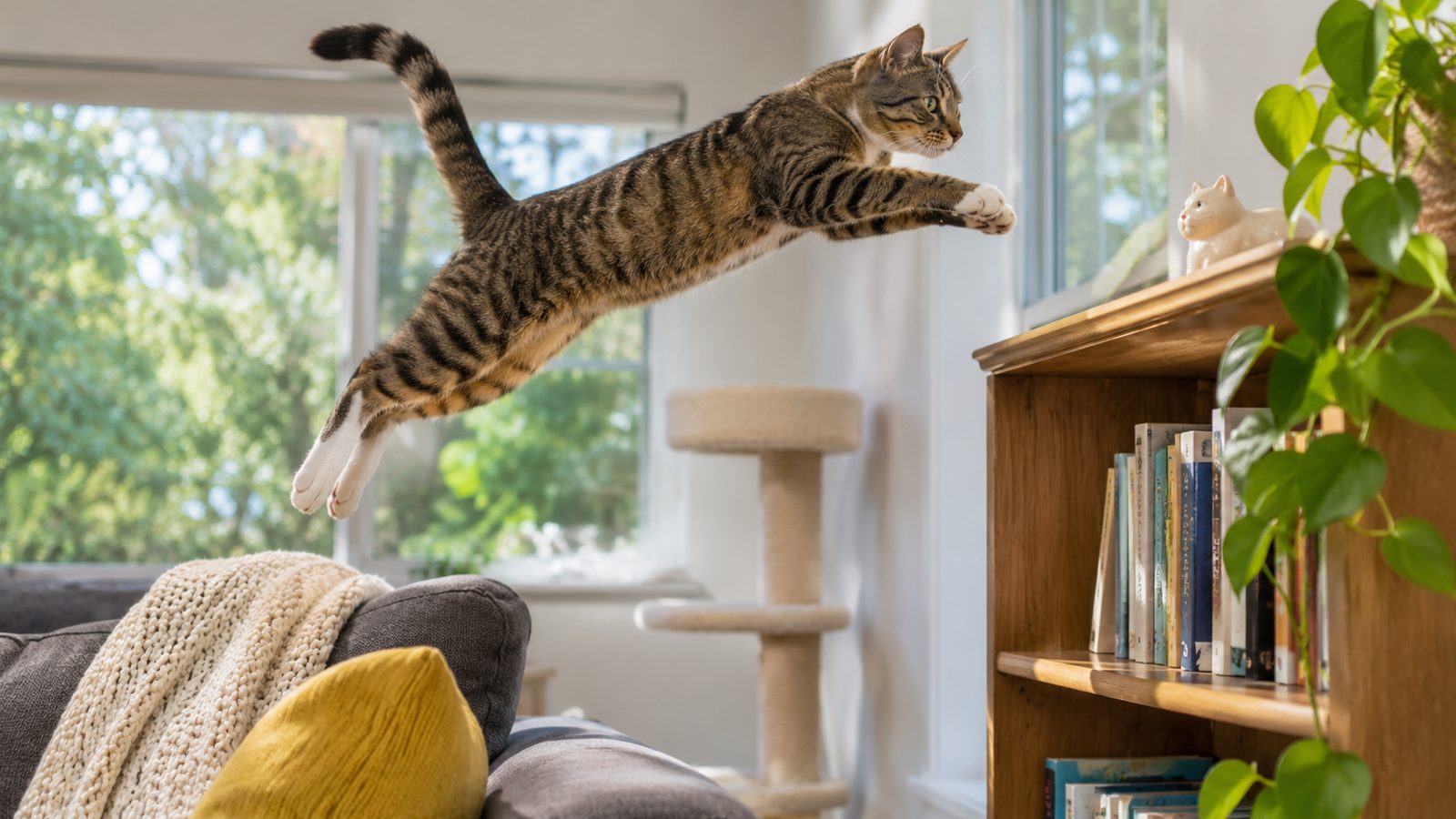




Cat jumping can look effortless, yet every leap depends on strength, balance, flexibility, and careful distance judgment. Healthy adults can reach surprisingly high surfaces without needing much running space. Changes in normal jumping habits can also reveal discomfort, fear, aging, or another health concern. Quick answer: Healthy domestic felines can often jump several times their own height. Powerful rear legs, a flexible spine, and excellent balance make those leaps possible. Jumping also helps them explore, play, hunt, escape threats, and reach secure resting places around the home.
| Key question | What owners should know |
|---|---|
| How high can they jump? | Many healthy adults can reach several feet vertically under favorable conditions. |
| Why do they jump? | Common reasons include play, exploration, hunting instincts, safety, and reaching elevated resting places. |
| What powers the leap? | Strong hind legs, spinal flexibility, balance, vision, and distance judgment work together. |
| Is jumping always safe? | No. Slippery surfaces, unstable furniture, open windows, and excessive heights can cause injuries. |
| When should owners worry? | Hesitation, failed jumps, reduced height, stiffness, or sudden avoidance deserve attention. |
| Do older pets jump differently? | They may jump less because of muscle loss, arthritis, pain, or other age-related changes. |
Why Do Felines Jump So Much?
Jumping is normal behavior rather than a strange household habit. Elevated positions can provide a better view of nearby activity. High resting places may also help an animal feel secure around people or other pets. Hunting behavior provides another explanation for frequent leaps. Pouncing and springing are natural parts of stalking moving targets. Interactive play can reproduce these movements safely inside the home. Curiosity matters as well because elevated furniture offers new smells, sights, and resting areas. A bookshelf or windowsill may seem more interesting than the floor. Owners can reduce unwanted leaps by providing suitable elevated alternatives.
How High Can a Cat Jump?
A healthy adult can often leap several times its body height under good conditions. Veterinary-reviewed guidance commonly describes vertical jumps reaching roughly five or six body lengths. Individual performance changes with age, size, fitness, health, and the available landing surface. Some veterinary-reviewed pet guides report that many house pets can reach around eight or nine feet. That figure should not become a target for home experiments. Maximum ability does not mean every leap is safe. Some animals also perform better horizontally than vertically. A running start can change the distance covered during a leap. Confidence, traction, and landing space can also affect performance.
How the Body Creates a Powerful Leap
Most of the force begins in the rear legs. The animal first lowers its body and bends the hind limbs. Powerful muscles then extend rapidly and push the body upward. The spine contributes by flexing and extending during takeoff. That movement helps transfer force through the body efficiently. The front legs then prepare for contact with the landing surface. Balance remains important after the paws leave the ground. The inner ear helps the body understand its orientation during movement. Vision and body awareness also help with midair corrections. Claws can provide extra grip when the destination allows them to catch. Upholstered furniture and climbing structures offer more traction than polished surfaces. That difference can affect both confidence and landing stability.
What Influences Jumping Ability?
Age creates one of the clearest differences between individuals. Young adults often combine strong muscles with good flexibility and coordination. Senior animals may lose strength or develop painful joint changes. Body condition also matters because excess weight increases the load placed on joints. Low muscle mass can reduce the force available during takeoff. Regular veterinary care can help owners manage both concerns appropriately. Health conditions can affect movement even before obvious limping appears. Joint disease, injuries, neurological problems, and weakness may change normal movement patterns. A sudden decline deserves more attention than a naturally cautious personality. Surface quality can change performance too. Carpet offers more traction than polished tile or slick countertops. Unstable furniture can also make an otherwise easy leap risky.
Safe Ways to Support Natural Jumping
Owners do not need to eliminate jumping from the home. Providing safer choices can satisfy natural behavior while reducing unnecessary risks. The goal should be controlled access to stable climbing and resting areas. Useful options include the following.
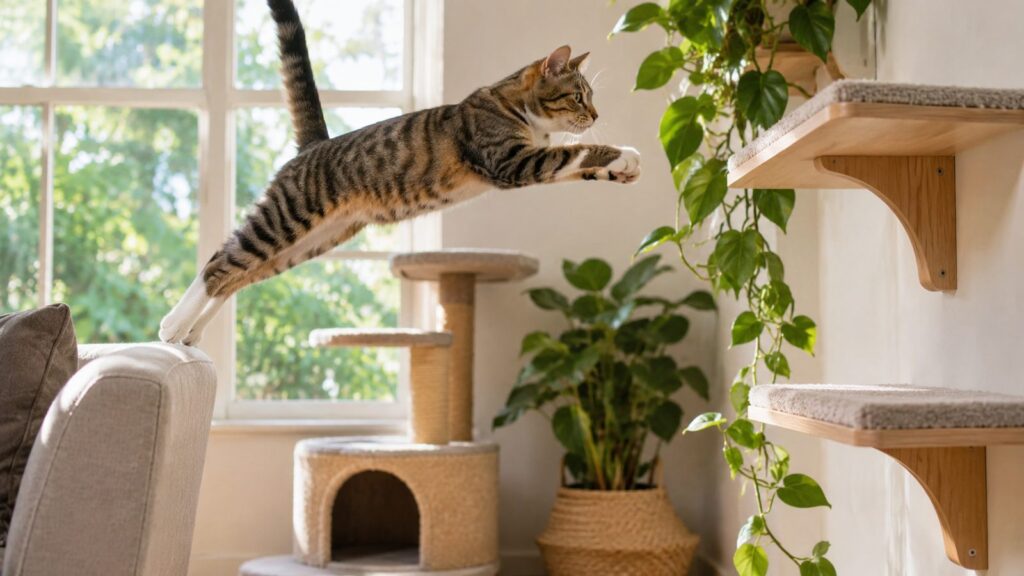
- Sturdy climbing trees with wide bases
- Secure window perches
- Wall shelves designed for animal use
- Low platforms for older companions
- Non-slip rugs near common takeoff areas
- Ramps or pet stairs beside favorite furniture
- Interactive wand toys used near safe flooring
Place climbing furniture away from fragile decorations and unstable shelves. Keep landing areas free from sharp objects or loose items. Check tall structures regularly for movement, damage, or loose hardware. Window safety deserves special attention in multi-story homes. Screens are not always designed to support an animal’s weight. Secure barriers can reduce the risk of falls from open windows.
Why Jumping on Counters Becomes a Problem
Kitchen counters offer several rewards from an animal’s perspective. They provide height, food smells, human activity, and a clear view. Punishment rarely changes those attractions permanently. A better strategy removes rewards while offering an acceptable elevated location nearby. Keep food covered and clean crumbs quickly after preparing meals. Reward use of an approved perch with attention or play. Consistency matters because occasional access can reinforce the behavior. Every household member should follow the same rules. A nearby climbing tree can make the alternative easier to understand. WatchingHub also maintains a broader Pets section with household safety and care topics. Owners managing curious climbers may also find the site’s cinnamon safety guide useful. Food, spices, plants, and elevated surfaces often create overlapping home-safety concerns.
When Reduced Jumping Can Signal Pain
A sudden change in normal movement deserves attention. A previously athletic pet may hesitate, make several attempts, or choose lower surfaces. Others may pull themselves upward using their front legs. The American Animal Hospital Association includes jumping among behaviors used to screen for chronic musculoskeletal pain. Changes can appear before owners notice obvious limping. Comparing current movement with earlier habits can provide useful information for a veterinarian. Watch for several changes happening together.
- Hesitating before jumping up or down
- Landing awkwardly or slipping more often
- Using intermediate furniture to reach favorite places
- Avoiding previously preferred high resting areas
- Playing less often
- Moving slowly after resting
- Resisting handling around the back or limbs
- Grooming less or changing normal routines
Record a short video when the behavior occurs naturally. Home footage can show movements that may not appear during a clinic visit. Avoid forcing repeated jumps simply to capture evidence.
Helping an Older Companion Reach Favorite Places
Senior animals often benefit from easier routes instead of losing elevated spaces completely. Add intermediate steps between the floor and a favorite bed. Choose surfaces with enough grip for secure footing. Keep food, water, litter areas, and sleeping spaces easy to reach. Long travel distances can become harder when mobility declines. Warm resting areas can also make older companions more comfortable. Veterinary assessment becomes important when mobility changes persist. Joint disease is common in older felines and can produce subtle behavioral changes. Earlier recognition can help owners discuss appropriate management options.
Preventing Household Jumping Injuries
Most ordinary leaps end without trouble, but preventable hazards still exist. Secure tall furniture that could tip under sudden movement. Remove unstable objects from commonly used landing zones. Avoid encouraging extreme jumps for entertainment or videos. An impressive leap can still end badly if traction fails. Play should challenge movement without requiring risky heights. Houseplants also deserve attention because agile pets can reach unexpected places. WatchingHub’s guide on peace lilies and feline toxicity explains why shelf placement alone may not prevent exposure. Closed rooms or safer plant choices can offer better protection.
Frequently Asked Questions About Cat Jumping
How high can a healthy domestic feline jump?
Many healthy adults can reach several times their body height. Some veterinary-reviewed sources place typical maximum vertical leaps near eight feet or higher. Ability varies greatly between individuals, so those figures should remain general estimates.
Why does my pet suddenly jump onto everything?
Extra climbing may reflect play, curiosity, hunting behavior, or a search for security. Environmental changes can also make elevated spaces feel more attractive. Watch for other behavioral changes if the increase appears suddenly.
Why has my pet stopped jumping onto furniture?
Reduced mobility can follow aging, pain, injury, weakness, or loss of confidence. Hesitation can matter even when obvious limping is absent. Persistent changes should be discussed with a veterinarian.
Is cat jumping good exercise?
Normal jumping can contribute to physical activity and mental stimulation. Safe climbing structures and interactive play can encourage useful movement. Avoid forcing high-impact activity when an animal shows pain, fatigue, or mobility changes.
Do felines always land safely?
No animal is guaranteed to land without injury. Distance, surface stability, health, and body position can affect the outcome. Prevent access to unsafe ledges rather than relying on natural balance.
Should I stop my pet from jumping completely?
Healthy animals generally need opportunities to climb, pounce, and explore. Removing every elevated option can frustrate natural behavior. Provide stable approved areas while restricting dangerous locations.
The Bottom Line
Jumping is a normal part of feline movement, exploration, play, and environmental awareness. Strong rear legs and flexible bodies make impressive leaps possible. Safe household design lets those instincts continue with fewer unnecessary hazards. Pay attention to changes rather than comparing your pet with another animal. Hesitation, reduced height, stiffness, or failed attempts can provide useful health clues. Contact your veterinarian when a noticeable mobility change persists or appears suddenly. For more practical pet-care topics, visit the WatchingHub Pets section. Make safe movement easier with stable perches, secure windows, and accessible resting spaces. Those changes support natural behavior without encouraging risky leaps. —