
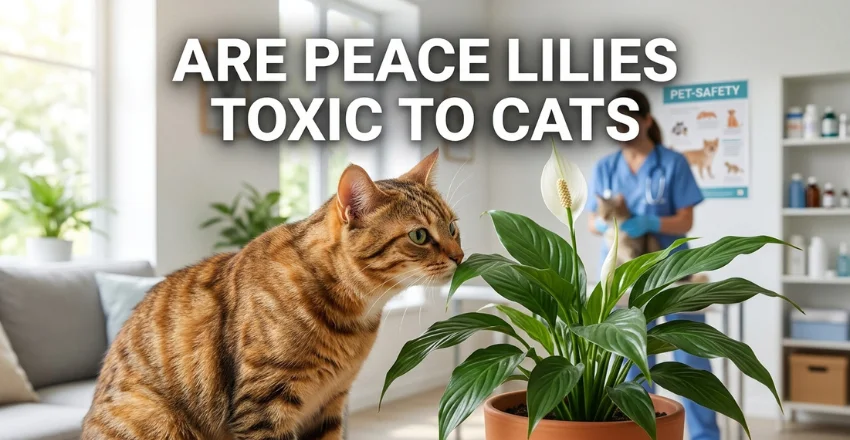

If you’re asking, are peace lilies toxic to cats? The answer is yes. Chewing can irritate a cat’s mouth and digestive tract. The risk differs sharply from true lilies, which can cause severe kidney injury.
Direct answer: Yes, peace lilies are toxic to cats because their tissues contain insoluble calcium oxalate crystals. Chewing can cause mouth pain, drooling, vomiting, and trouble swallowing. Peace lilies are not true lilies, so they do not cause kidney failure linked to Lilium or Hemerocallis species.
Peace Lily and Cat Safety at a Glance
| Question | What Cat Owners Should Know |
|---|---|
| Is a peace lily toxic? | Yes. The ASPCA classifies Spathiphyllum as toxic to cats. |
| What causes the reaction? | Insoluble calcium oxalate crystals inside the plant. |
| Common symptoms | Mouth irritation, drooling, vomiting, and difficulty swallowing. |
| Does it cause kidney failure? | No. That severe risk is associated with true Lilium and Hemerocallis lilies. |
| When is it urgent? | Breathing trouble, marked swelling, repeated vomiting, or uncertain plant identification need prompt veterinary attention. |
| U.S. poison help | ASPCA Animal Poison Control: 888-426-4435. Pet Poison Helpline: 855-764-7661. Fees may apply. |
Key Takeaways
| Key Point | Practical Meaning |
|---|---|
| Toxic, but different from true lilies | A bite can be painful, yet it does not carry the same kidney-failure risk. |
| Symptoms often involve the mouth | Watch for drooling, pawing, oral discomfort, vomiting, or swallowing difficulty. |
| Plant identification matters | Never assume every plant called a “lily” creates the same risk. |
| Inducing vomiting at home is unsafe for cats | Contact a veterinarian or poison service before trying any treatment. |
Why Are Peace Lilies Toxic to Cats?
The U.S. Food and Drug Administration’s guidance on lilies and cats states that peace lilies contain insoluble calcium oxalate crystals. Chewing releases these needle-like crystals into the mouth, tongue, and throat. They can cause immediate pain, irritation, swelling, and drooling.
This mechanism is irritating, not kidney-toxic. That distinction matters because the word “lily” appears on several unrelated plants. Correct plant identification helps veterinarians judge urgency and choose appropriate treatment.
Peace Lily vs. True Lily: Why the Name Matters
A peace lily belongs to the Spathiphyllum genus, within the Araceae family. Dangerous true lilies belong to Lilium or Hemerocallis groups. Exposure to true lilies can cause severe kidney damage in cats.
| Feature | Peace Lily | True Lilies |
|---|---|---|
| Examples | Spathiphyllum | Easter, tiger, Asiatic, stargazer, and daylilies |
| Main hazard | Calcium oxalate irritation | Severe kidney toxicity |
| Typical early signs | Mouth pain, drooling, vomiting | Vomiting, poor appetite, lethargy |
| Kidney failure risk | Not expected from this plant | Yes, potentially severe |
| Recommended response | Identify plant and contact veterinary help when needed | Seek emergency veterinary care immediately |
True lily exposure deserves special caution because tiny exposures may be dangerous. Pollen and vase water can also create a risk with true lilies. Immediate veterinary treatment is recommended when Lilium or Hemerocallis exposure is suspected.
Symptoms of Peace Lily Exposure in Cats
Signs often begin soon after a cat chews the plant. The ASPCA lists oral irritation, mouth burning, drooling, vomiting, and difficulty swallowing. Merck also notes pawing at the mouth, swelling, lethargy, and reduced appetite.
Symptoms can vary depending on how much the cat chews and the cat’s individual response. Most insoluble-oxalate exposures have a good prognosis with appropriate supportive care. Breathing problems can occur if swelling affects the upper airway.
What to Do If Your Cat Bites a Peace Lily

Move the plant away and keep your cat in a safe area. If possible, identify the plant from its label or a clear photograph. Then contact your veterinarian or a pet poison service for guidance specific to your case.
| Action | Why It Matters |
|---|---|
| Remove access to the plant | This prevents more chewing while you assess your cat. |
| Save the label or take a photo | Plant identification can change the recommended response. |
| Remove visible plant material carefully | Merck recommends removing remaining plant material when you can do so safely. |
| Gently rinse or wipe the mouth if tolerated | This can help clear irritating plant material. |
| Do not induce vomiting | No safe home method exists for inducing vomiting in cats. |
| Call for professional guidance | A veterinarian can assess symptoms, exposure, and plant identification. |
Do not give hydrogen peroxide to make a cat vomit. Pet Poison Helpline warns that peroxide can injure a cat’s stomach and esophagus. Avoid home antidotes unless a veterinary professional recommends them.
U.S. owners can call the ASPCA Animal Poison Control Center at 888-426-4435. Pet Poison Helpline is available at 855-764-7661 and operates around the clock. Both services may charge consultation or incident fees.
When Is Peace Lily Exposure an Emergency?
Treat breathing trouble as an emergency because airway swelling can become dangerous. Severe swallowing problems or significant mouth swelling also need prompt veterinary assessment. Repeated vomiting or worsening weakness can justify urgent care as well.
Plant uncertainty creates another serious situation. Treat an unidentified “lily” more cautiously until you confirm its scientific identity. True lily exposure requires much faster treatment because kidney injury can develop.
Which Parts of a Peace Lily Can Cause Problems?
Leaves, stems, and flowers contain irritating calcium oxalate crystals. Chewing plant tissue releases those crystals against sensitive tissues inside the mouth. Even a small bite can therefore produce noticeable oral discomfort.
The reaction differs from the danger created by true lily pollen. With Spathiphyllum, chewing plant tissue is the central concern. True lilies create different risks and should never be treated as equivalent exposures.
How to Reduce the Risk at Home
Keeping a toxic plant on a tall shelf may not stop an agile cat. Closed rooms or removing the plant entirely provide more reliable separation. Households with persistent plant-chewers may prefer cat-safe greenery instead.
Before bringing home another houseplant, check its scientific name against a veterinary plant database. Common names can describe unrelated plants with different toxicity profiles. The ASPCA maintains a searchable database of toxic and non-toxic plants for pet owners.
For broader animal-care reading, visit Watching Hub’s Pets section. The site also publishes practical ownership content, including its Maltipoo grooming guide. These pages provide related pet-care reading for U.S. households.
Cat-Safe Alternatives to Consider
You can replace a risky houseplant with species classified as non-toxic to cats. ASPCA listings include spider plants, Boston ferns, parlor palms, and Phalaenopsis orchids. Checking the scientific name remains useful because common plant names can overlap.
| Plant | ASPCA Cat Safety Classification |
|---|---|
| Spider plant | Non-toxic to cats |
| Boston fern | Non-toxic to cats |
| Parlor palm | Non-toxic to cats |
| Phalaenopsis orchid | Non-toxic to cats |
A non-toxic classification does not mean eating large amounts of plant material is desirable. The ASPCA notes that plant material can still cause gastrointestinal upset in pets. Keeping tempting greenery away from frequent chewers can still reduce digestive problems.
Frequently Asked Questions
Are Peace Lilies Toxic to Cats?
Yes, the ASPCA classifies Spathiphyllum as toxic to cats. The main problem is irritation from insoluble calcium oxalate crystals. Typical effects involve the mouth and digestive tract, not the kidneys.
Can a Peace Lily Cause Kidney Failure in a Cat?
Peace lily exposure is not associated with the acute kidney failure caused by true lilies. Lilium and Hemerocallis species create that severe renal risk. Correctly identifying the plant is therefore essential after a suspected exposure.
How Quickly Can Symptoms Appear?
The irritating crystals contact oral tissue as soon as a cat chews the plant. Mouth pain and drooling can therefore appear quickly after exposure. Monitor the cat closely and seek veterinary guidance if symptoms are significant.
Should I Make My Cat Vomit After Eating the Plant?
No home method can safely induce vomiting in a cat. Hydrogen peroxide can damage feline stomach and esophageal tissue. Contact your veterinarian or an animal poison service before giving any home treatment.
Can I Keep a Peace Lily If My Cat Cannot Reach It?
Physical separation lowers exposure risk, but cats can reach surprising locations. A closed pet-free room offers better control than an open shelf. Replacing the plant with an ASPCA-listed cat-safe option removes the poisoning concern more effectively.
The Bottom Line
Peace lilies can cause painful mouth and digestive irritation when cats chew them. They do not share the severe kidney toxicity of true lilies. Knowing the plant’s identity helps you choose the right level of veterinary response.
Remove access after an exposure and watch your cat for concerning symptoms. Contact a veterinarian promptly when symptoms worsen or the plant’s identity is uncertain. You can also explore Watching Hub’s homepage for more recently published guides.
This article provides general pet-safety information for U.S. readers. It does not replace veterinary diagnosis or individualized poison-control advice. Contact a veterinarian promptly when you are concerned about a possible poisoning.