
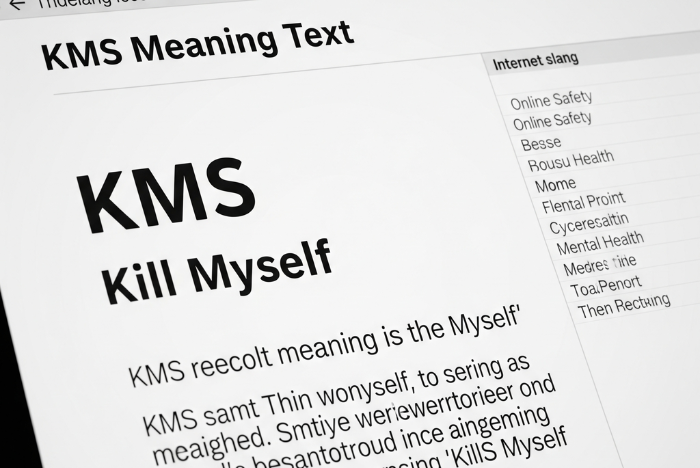


In the fast-paced world of online communication, abbreviations and acronyms are a cultural staple. They help convey messages quickly and efficiently, often saving valuable typing time, especially on mobile devices. One such abbreviation you might have come across is KMS, commonly used in texting and social media conversations. But what exactly does KMS mean in text? In this article, we’ll explore the different meanings, origins, and contexts of KMS, as well as why it’s important to understand its usage.
What Does KMS Mean in Text?
The primary meaning of KMS in texting language is “Kill Myself”. It is often used to express feelings of frustration, embarrassment, or exasperation in reaction to a situation or event. For example, someone might text “I failed the quiz, KMS” to exaggerate how upset they feel.
However, while “Kill Myself” is the most common interpretation, it’s critical to approach this abbreviation with care, as it can indicate serious emotional distress or even suicidal ideation in some contexts. If you encounter KMS being used in a message that seems more than a casual expression of frustration, it’s important to check in on the person or seek help if necessary.
Other Possible Meanings
Though “Kill Myself” is the primary meaning associated with KMS in texting, abbreviations can sometimes carry multiple meanings depending on the context. A few less common interpretations might include:
- Key Management System: In computing and cybersecurity, KMS can refer to a system that manages encryption keys.
- kilometers: Though mathematically KMS could be a plural form of “km” (kilometer), this is not common in texting slang.
- KMS (company names): The acronym is also used by various companies like KMS Technology, but such usage is typically unrelated to texting slang.
When it comes to casual conversations in texting, the “Kill Myself” meaning overwhelmingly dominates.
Origins of KMS in Texting and Internet Slang
KMS originated as part of the broader trend of internet shorthand that became popular during the rise of instant messaging platforms and SMS texting in the early 2000s. Users often relied on acronyms to quickly express complex emotions or reactions in limited character spaces.
The use of KMS as an expression of frustration or embarrassment likely stems from hyperbolic and humorous exaggeration of feelings rather than actual suicidal intent. Much like other phrases such as “I’m dying” or “I’m dead” used to indicate overwhelming emotion or humor, KMS is another piece of casual internet vernacular to express strong feelings in a relatable way.
Using KMS Responsibly: When to Be Careful
While KMS meaning text is often used casually, it is essential to understand that it can carry serious connotations. Suicide and mental health are sensitive topics, and joking references to them can sometimes be harmful or triggering to people.
If someone uses KMS frequently or in a context that suggests genuine emotional pain, it may be a sign that they need support. Responding with kindness, asking if they’re okay, or encouraging them to seek help from friends, family, or professionals can make a difference.
Moreover, if you yourself struggle with feelings that lead you to use phrases like KMS, reaching out to mental health resources or hotlines can provide valuable support and guidance.
How to Interpret KMS in Different Contexts
Because KMS is a phrase heavily dependent on tone and context, its meaning can vary:
- Humorous or Light-Hearted Context: Often among close friends or in informal settings, KMS might be used playfully to express secondhand embarrassment or extreme frustration over a minor issue.
- Serious or Concerning Tone: If KMS is used alongside messages about sadness, hopelessness, or despair, it’s important to consider the potential seriousness of the message and respond accordingly.
- Professional or Formal Contexts: KMS is generally inappropriate and unprofessional in formal communication and should be avoided.
Similar Abbreviations and Alternatives
There are numerous similar texting abbreviations related to emotions or reactions, such as:
- SMH: Shaking My Head – indicates disappointment or disbelief.
- FML: F*** My Life – used to express frustration or bad luck.
- DM: Direct Message – used to indicate private messaging.
- IDC: I Don’t Care – used to express indifference.
Each abbreviation varies in tone and severity, so understanding the context is key to interpreting them correctly.
Conclusion
In summary, the KMS meaning text is primarily “Kill Myself,” an expression commonly used online and in text conversations to denote strong feelings of frustration, embarrassment, or overwhelm. While often intended humorously or hyperbolically, it’s important to be mindful of the mental health connotations and use it responsibly.
As digital communication continues evolving, staying informed about the meanings behind common slang like KMS helps us better understand and connect with one another. Remember, if you or someone you know is struggling, do not hesitate to seek help and support.
Apart from this, if you are interested to know more about What’s the Difference Between Tom Knife and Cyberknife then visit our Tech category.