
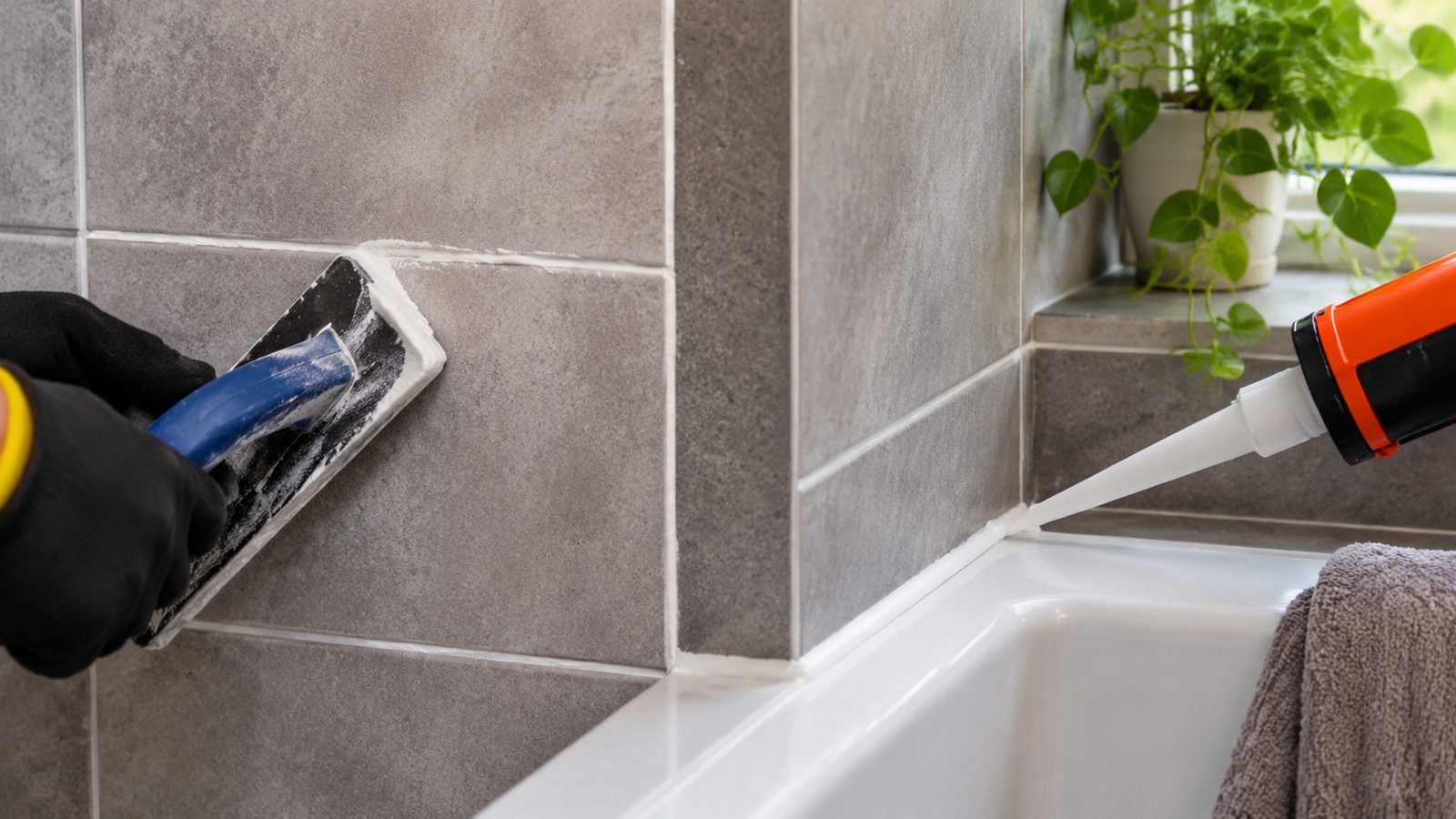




Choosing between grout and caulk becomes simple once you understand how a tile joint moves. Grout caulk decisions depend mainly on whether the surfaces remain rigid or need flexibility. Grout belongs between stable tiles, while flexible sealant belongs at corners, transitions, and moving joints. For most U.S. homeowners, the key rule is easy to remember. Use grout between tiles that share the same flat surface. Use caulk where tile changes direction, meets another material, or needs room for movement.
Grout vs. Caulk at a Glance
| Feature | Grout | Caulk or Flexible Sealant |
|---|---|---|
| Main purpose | Fills joints between tiles | Seals joints that can move |
| Texture after curing | Hard and rigid | Flexible |
| Common locations | Tile floors and walls | Corners, tubs, sinks, countertops |
| Best for changes of plane | No | Yes |
| Typical wet-area choice | Cement, specialty, or epoxy grout | Often 100% silicone |
| Repair approach | Remove damaged material and regrout | Remove old bead and recaulk |
| Color options | Wide selection | Clear, white, and color-matched options |
Direct answer: Use grout between adjacent tiles on the same plane. Use flexible caulk where surfaces meet at corners, edges, tubs, shower pans, countertops, or other transitions. Flexible sealant handles small amounts of movement that can crack a rigid joint. Product manufacturers follow the same basic principle. CUSTOM specifies flexible silicone for corners, coves, expansion joints, and changes of plane. MAPEI also directs installers toward caulking where bathroom surfaces change plane.
Why Grout and Caulk Do Different Jobs
Grout creates a hard joint between tiles after it cures. That rigidity helps maintain a finished tile surface and protects exposed tile edges. It works best where neighboring tiles remain stable relative to each other. Flexible sealants solve a different problem. Walls, floors, tubs, countertops, and other materials can move slightly as buildings settle or temperatures change. A flexible bead can absorb some movement without splitting like a rigid joint. This distinction explains many recurring cracks in showers and bathrooms. MAPEI lists grout installed at moving, change-of-plane joints as a cause of cracking. Its guidance recommends an appropriate caulking product in those locations.
Where to Use Grout Caulk in a Tile Project
Think about the joint rather than the room. A bathroom can contain several areas requiring grout and several requiring flexible sealant. The correct choice can change within a few inches.
Use Grout Between Tiles on the Same Plane
Use grout in the regular joints between neighboring tiles across a stable wall or floor. These joints normally follow the spacing created during installation. They aren’t intended to expand and contract like movement joints. Common examples include the following.
* Ceramic floor tiles across a bathroom floor. * Porcelain tiles across a shower wall. * Backsplash tiles across a flat kitchen wall. * Mosaic tiles installed across one stable surface. * Tile joints across a properly prepared countertop.
Don’t replace these ordinary field joints with soft caulk without a specific reason. A flexible product behaves differently from the surrounding hard joints. It may also create an inconsistent appearance or maintenance problem.
Use Caulk at Corners and Changes of Plane
Inside corners are one of the most common places homeowners use the wrong material. Two tiled walls may look connected, but each surface can move independently. A flexible joint allows that small movement without forcing a rigid filler to absorb it. Use an appropriate sealant at the following locations.
* Shower wall corners. * Wall-to-floor transitions. * Tile-to-shower-pan joints. * Tile-to-bathtub transitions. * Countertop-to-backsplash joints. * Tile meeting a sink or fixture. * Perimeter movement joints specified by the installation design.
CUSTOM describes caulk as appropriate for transition joints where structural movement can occur. Its examples include countertop-to-backsplash, tile-to-tub, and wall-to-floor transitions.
Should You Use Silicone in a Shower?
A wet shower needs a product designed for persistent moisture and movement. 100% silicone is a common choice for shower corners and similar wet-area transitions. Always confirm that the specific product is approved for your application. Silicone remains flexible after curing and can form a water-resistant seal. Products intended for tile installations are also available in colors coordinated with common grout lines. This helps the finished corner blend with surrounding joints. Not every tube labeled “caulk” suits constant water exposure. For example, CUSTOM distinguishes some interior ceramic tile caulks from its 100% silicone wet-area products. Read the label instead of choosing by color alone.
Sanded Caulk Is Not the Same as Grout
Sanded caulk can resemble a traditional cementitious joint because it contains texture. That appearance sometimes makes homeowners assume it performs like grout. It remains a flexible sealing product rather than a rigid tile-joint filler. Manufacturers offer sanded and unsanded versions to improve visual matching. The correct version depends on the product, joint size, surface, and installation requirements. Follow the manufacturer’s technical data instead of applying a universal width rule. Color-matched products are useful when a corner should visually continue the surrounding joint pattern. CUSTOM specifically recommends coordinating caulk for movement joints and changes of plane.
Can You Caulk Over Cracked Grout?
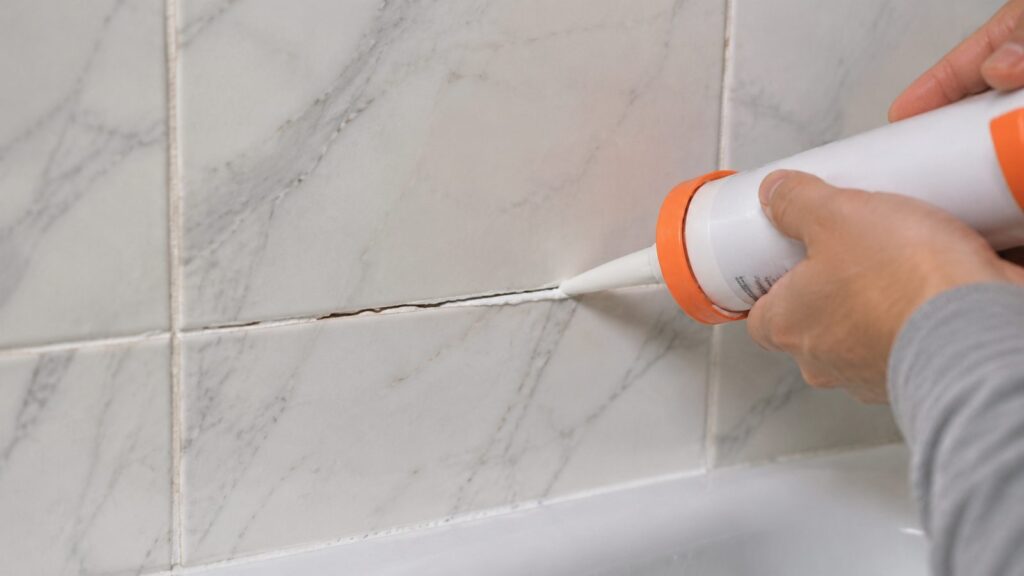
Putting a fresh bead directly over failing material rarely fixes the cause. Loose or cracked material underneath can prevent a clean, durable bond. The joint should first be identified as either a rigid tile joint or a movement joint. If the crack appears in an inside corner, tub edge, or similar transition, remove the failed material before resealing. Clean and dry the joint according to the new sealant’s instructions. Then apply the correct flexible product to the prepared joint. A crack between tiles on the same flat plane needs different attention. Repeated cracking there can indicate movement, deflection, loose tile, or another installation problem. Covering that symptom with caulk may hide rather than solve the underlying issue.
A Room-by-Room Decision Guide
Bathrooms contain the most common mix of hard and flexible joints. Grout normally fills the field joints between wall or floor tiles. Flexible sealant normally handles shower corners, tub edges, and other material transitions. Kitchens follow the same rule. Grout usually fills backsplash tile joints across the wall. The backsplash-to-countertop connection benefits from flexibility because those surfaces can move differently. Laundry rooms and utility spaces also deserve careful inspection. Water near a tiled surface does not always come from a failing joint. If the source appears connected to plumbing equipment, WatchingHub’s guide to repairing a leaky water heater may help narrow the problem. repairing a leaky water heater
How to Replace Failed Caulk Around Tile
A neat replacement starts with complete preparation rather than a thicker new bead. Old silicone, loose material, soap residue, and moisture can interfere with adhesion. Give the new product a clean surface to contact. Follow these basic steps:
1. Identify the joint. Confirm that the location needs flexible sealant rather than rigid filler. 2. Remove the old material. Cut and scrape away the failed bead without damaging nearby tile. 3. Clean the surfaces. Remove residue according to the tile and sealant manufacturer’s instructions. 4. Let the joint dry. Trapped moisture can interfere with adhesion and appearance. 5. Apply the new bead. Follow the recommended joint dimensions and application method. 6. Tool the bead neatly. Create continuous contact with both sides of the joint. 7. Allow full curing. Keep the area dry for the period stated on the product label.
Many common silicone and latex products can require about a day before full water exposure. Conditions and formulas vary, so packaging directions control the actual curing time. The Home Depot also advises checking drying time, flexibility, adhesion, and moisture suitability when choosing a sealant.
Mistakes That Lead to Cracking or Early Failure
The first mistake is filling a moving corner with rigid material. The joint may look fine initially, but normal building movement can create a hairline crack. Repeatedly repairing it with the same rigid product can produce the same result. The second mistake is applying new sealant over dirty or loose material. Adhesion depends on proper surface contact. Soap film, deteriorated beads, and leftover silicone can shorten the life of a repair. The third mistake is assuming the visible joint provides the bathroom’s complete waterproofing system. A properly constructed wet area relies on its underlying installation and waterproofing design. Surface joints are only one part of that system. For larger renovation work, preparation matters beyond tile joints. WatchingHub’s construction-project checklist covers foundation, plumbing, electrical work, and other planning concerns. construction-project checklist
How to Choose the Right Product
Start by identifying whether the joint stays rigid or needs movement. Then check whether the location remains dry, gets occasional splashes, or experiences regular water exposure. Those two questions narrow the choices quickly. For showers and other wet transitions, look for a product specifically approved for that environment. ASTM C920-compliant silicone products are commonly specified for movement joints in professional tile systems. CUSTOM lists its 100% silicone product for wet applications, changes of plane, and expansion joints. Color also affects the finished appearance. You can match the surrounding grout, choose white near plumbing fixtures, or use clear sealant where appropriate. Staying within one manufacturer’s coordinated color system can make matching easier. Homeowners planning a larger remodel can also think beyond the immediate repair. WatchingHub’s home-building feature guide offers ideas for integrating practical improvements during construction or renovation. home-building feature guide
When to Call a Tile Professional
Small cosmetic repairs can often be reasonable DIY projects. Repeated cracking, loose tiles, soft walls, persistent moisture, or unexplained staining deserves closer investigation. Those symptoms can point beyond a worn surface joint. A professional can determine whether movement, substrate damage, poor installation, or water intrusion causes the problem. Fixing the cause is more useful than repeatedly covering the symptom. This is especially important in showers and other regularly wet spaces. You should also seek professional help when a repair requires removing substantial tile. Incorrect demolition can damage waterproofing or nearby surfaces. A targeted inspection may prevent a minor repair from becoming a larger renovation.
Frequently Asked Questions About Grout Caulk
Is grout the same as caulk?
No, the two products perform different jobs. Grout cures into a hard joint between stable tiles. Caulk stays flexible for corners, transitions, and joints that can move.
Should shower corners be grouted or caulked?
Shower changes of plane normally need flexible sealant rather than rigid filler. Manufacturer guidance commonly directs installers toward caulk or silicone at these locations. Always follow the tile-system and sealant manufacturer’s specifications.
Can you put caulk over existing grout?
You can physically cover a joint, but that doesn’t make it a sound repair. Remove failing material when the joint should contain flexible sealant. If a flat tile joint is cracking repeatedly, investigate why before covering it.
Is grout waterproof?
Cement-based grout should not be treated as the primary waterproofing system in a shower. Tile installations can use different grout technologies and sealers. The underlying wet-area assembly still needs proper water management.
Is sanded caulk still flexible?
Yes, sanded caulk remains a flexible sealing product despite its textured appearance. The added texture helps it resemble nearby grout. It doesn’t turn the product into a rigid cementitious joint.
How long should caulk dry before using a shower?
The correct waiting period comes from the product label. Many common formulations need around 24 hours, while some products cure faster or slower. Temperature, humidity, bead size, and chemistry can affect curing time.
The Bottom Line
The easiest way to choose the right material is to look at movement. Grout belongs in stable joints between tiles on the same plane. Flexible caulk belongs where planes change, materials meet, or movement needs accommodation. Correct placement can reduce recurring cracks and messy repairs. Product selection also matters, especially in showers and other wet locations. Check the manufacturer’s instructions before applying any grout or sealant. Inspect damaged joints before automatically covering them. A failed bead may need simple replacement, while repeated cracking can signal a larger installation issue. Fixing the correct problem first usually creates a cleaner and longer-lasting result. —