
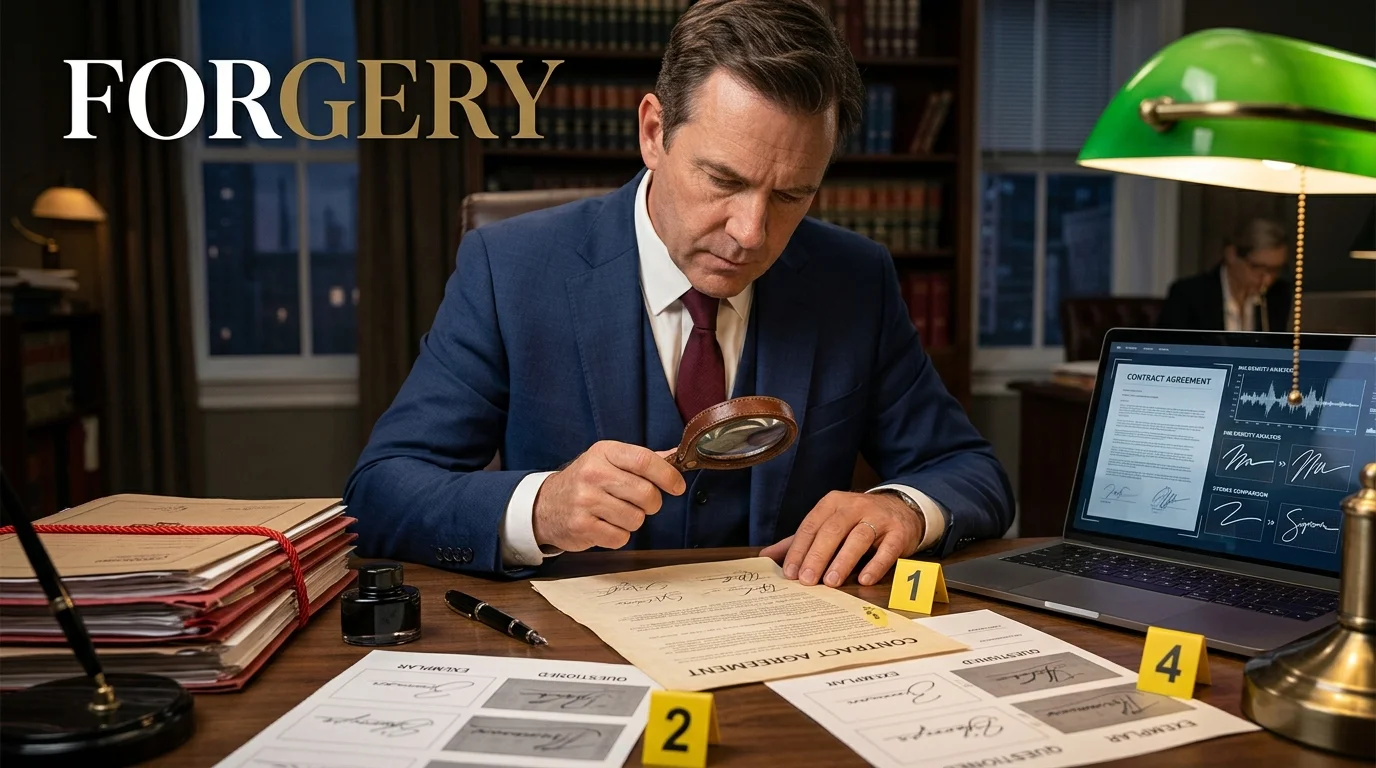




A false signature on a check, an altered contract, or a fake certificate can look convincing enough to influence an important decision. Forgery is the making, alteration, or imitation of a document, signature, or other item so that it can be accepted as genuine when it is not. The legal details vary by jurisdiction, but deceptive intent is usually central to the offense.
Direct answer: A false item becomes legally significant when someone creates or changes it so that another person will accept it as authentic. The issue is usually more than whether something is inaccurate. Courts and investigators also consider who created it, whether that person had authority, what was changed, and how the item was intended to be used.
| Key question | What to know |
| What can be falsified? | Signatures, checks, contracts, IDs, certificates, prescriptions, artwork, records, and some digital documents |
| What usually matters legally? | A false or materially altered item, along with deceptive or fraudulent intent |
| Is every imitation illegal? | No. Context, authorization, representation, and local law matter |
| Is it the same as fraud? | No. Fraud is broader and can occur without a false document |
| Is it the same as counterfeiting? | Not exactly. Counterfeiting commonly refers to fraudulent copies of money, goods, or other valuable items |
| How can false documents be detected? | Record comparison, handwriting examination, document analysis, source verification, and digital checks |
| Do penalties stay the same everywhere? | No. Charges and penalties depend on the jurisdiction and the facts of the case |
Key takeaway: The appearance of a fake signature or altered record is only part of the analysis. Authority, intent, legal significance, and use often determine whether the conduct creates criminal or civil consequences. Also worth reading: Can Felons Get A Passport.
What Makes Forgery a Legal Problem?
A simple mistake on a document is different from deliberately making something appear authentic. Traditional legal definitions generally focus on creating or altering a legal instrument with the intent to defraud. Many modern laws follow a similar approach by focusing on making a false instrument so that someone will accept it as genuine.
That distinction matters because a document can contain incorrect information without being executed in error. A person might also reproduce an item for educational, restoration, theater, or other legitimate purposes without presenting it as authentic.
Intent becomes especially important when someone changes a check, signs another person’s name without authority, creates a false certificate, or alters an identity document. The circumstances surrounding the document can help show what the person intended to accomplish.
Legal rules are not identical worldwide. A specific act may fall under document fraud, identity offenses, counterfeiting laws, false-instrument statutes, or another offense, depending on where it occurs. If a real dispute is involved, local legal advice is more reliable than applying a general definition.
Readers looking for broader legal material can also explore Watching Hub’s Law coverage and legal-issues archive.
Seven Common Forms of Document and Object Falsification
False items take many forms, and the object involved often determines how investigators approach the case.
| Type | Typical example | Main concern |
| False signature | Signing another person’s name on a check or agreement | Unauthorized execution |
| Altered financial document | Changing an amount, payee, or other material detail | Financial loss or deception |
| False identity record | Creating or changing an ID, passport, or license | Identity misuse |
| False certificate | Producing an invented diploma, license, or certificate of authenticity | False qualifications or provenance |
| False prescription | Creating an unauthorized medical prescription | Unlawful access to medication |
| Misrepresented artwork | Selling a work as the creation of another artist | False authorship or provenance |
| Altered digital document | Changing important text, images, signatures, or record details | Digital deception and authentication problems |
Legal cases frequently involve fake prescriptions, false certificates of authenticity, altered financial records, and fraudulent identity documents.
Digital records have made the issue more complex. A person may be dealing with a scanned signature, an edited PDF, a manipulated image, an electronic record, or a copied identity document rather than a handwritten paper document.
The format changes, but the central question remains the same: Is the record presented as authentic when its origin or material content has been falsified?
Fraud, Counterfeiting, and False Documents Are Not the Same
These terms overlap, but they describe different ideas.
| Term | Main focus | Can it exist without a false signature? |
| False-document offense | Making, changing, or presenting an item as authentic | Yes |
| Fraud | Deception intended to obtain an improper benefit or cause a loss | Yes |
| Counterfeiting | Fraudulent copying of money, documents, goods, or valuable items | Yes |
| Identity theft or identity fraud | Wrongfully obtaining or using another person’s identifying information | Yes |
Fraud is the broadest concept in this comparison. Someone can lie about an investment, hide a material fact, or run an impersonation scam without creating a false document.
Counterfeiting usually focuses on creating a fraudulent copy. Money, documents, designer items, and other valuable goods are common examples.
Identity fraud can overlap with document falsification when someone produces fake identification using another person’s information. It may also involve the wrongful use of another person’s personal data through fraud or deception. Keeping these distinctions clear helps readers understand why one incident can lead to several different allegations.
How False Signatures and Altered Documents Are Detected
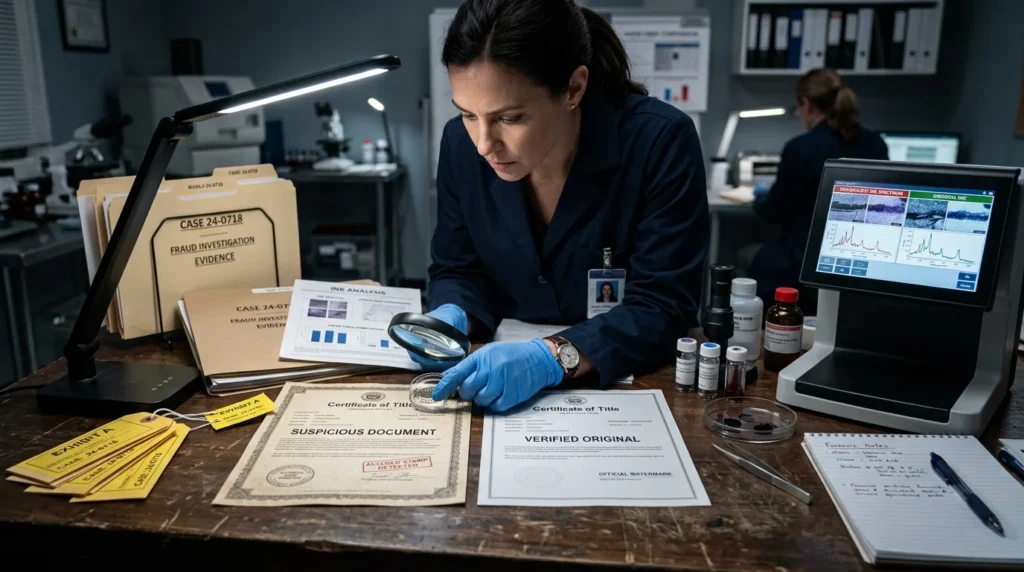
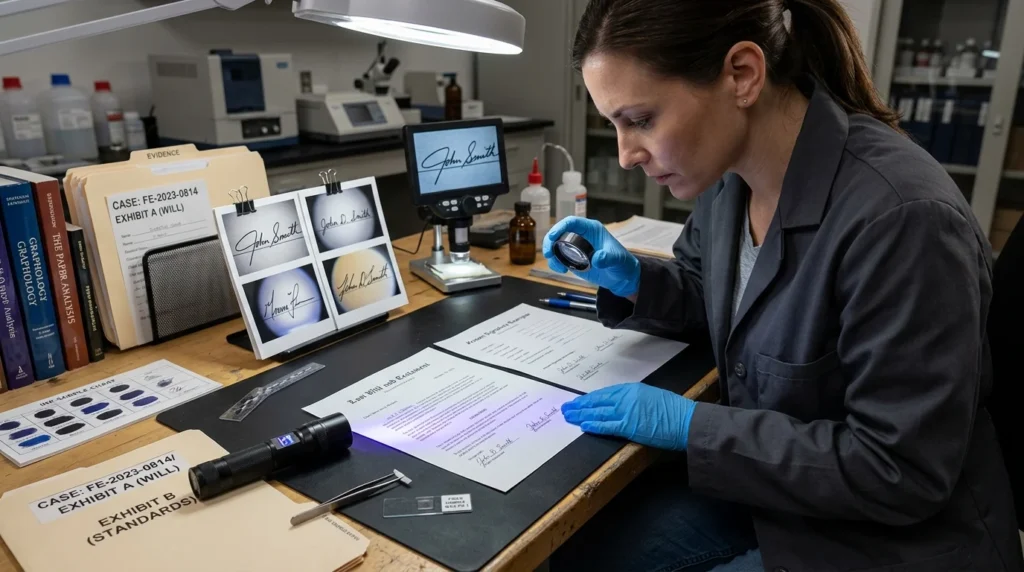
A strange-looking signature can raise suspicion, but appearance alone does not prove who created it. Forensic document examiners compare handwriting features, questioned signatures, and known samples. These specialists examine distinctive characteristics to assess whether handwriting or signatures appear genuine.
Common warning signs include:
- unusually slow, shaky, or hesitant strokes;
- unexpected pen lifts, retouching, or inconsistent letter proportions;
- two supposedly handwritten signatures that appear unnaturally identical;
- mismatched fonts, spacing, alignment, seals, dates, or document formatting;
- unexplained edits, missing original files, inconsistent records, or suspicious digital histories.
These clues should be treated as reasons to verify a record, not as a final verdict. Professional examination may involve original documents, known handwriting samples, printing methods, document structure, and other evidence.
For electronic records, verification may also involve checking the source file, account records, audit history, digital certificates, or information held by the issuing organization.
The same evidence-first principle applies throughout legal disputes. Watching Hub’s article on how an assault lawyer builds a case discusses the importance of analyzing reports, witness evidence, and supporting records rather than relying on assumptions.
What to Do When You Suspect a False Document
The first goal should be to preserve evidence rather than trying to prove the case yourself.
| Action | Why it matters |
| Keep the original | Physical characteristics may matter during an examination |
| Save digital copies | Files, messages, and attachments can establish where a document came from |
| Record dates and events | A timeline helps connect the item with transactions or communications |
| Contact the issuer | A bank, school, agency, employer, or other source may confirm authenticity |
| Avoid writing on the item | New marks can complicate a later examination |
| Report financial risk quickly | Banks and relevant institutions may have time-sensitive procedures |
| Get local legal advice when needed | Applicable laws and remedies depend on the jurisdiction |
Documentation can become important whenever facts are disputed. Watching Hub’s guide to documenting information after a car accident likewise stresses preserving photographs, notes, reports, and other records that may later become evidence.
If a false check, contract, ID, prescription, or financial record affects you, keep any communications connected with it. Save emails, envelopes, messages, receipts, transaction records, and copies received from other parties.
Do not confront a suspected offender if doing so could put you at risk. Serious financial, criminal, employment, property, or identity issues should be referred to the appropriate institution or a qualified professional.
Why Intent, Authority, and Context Matter
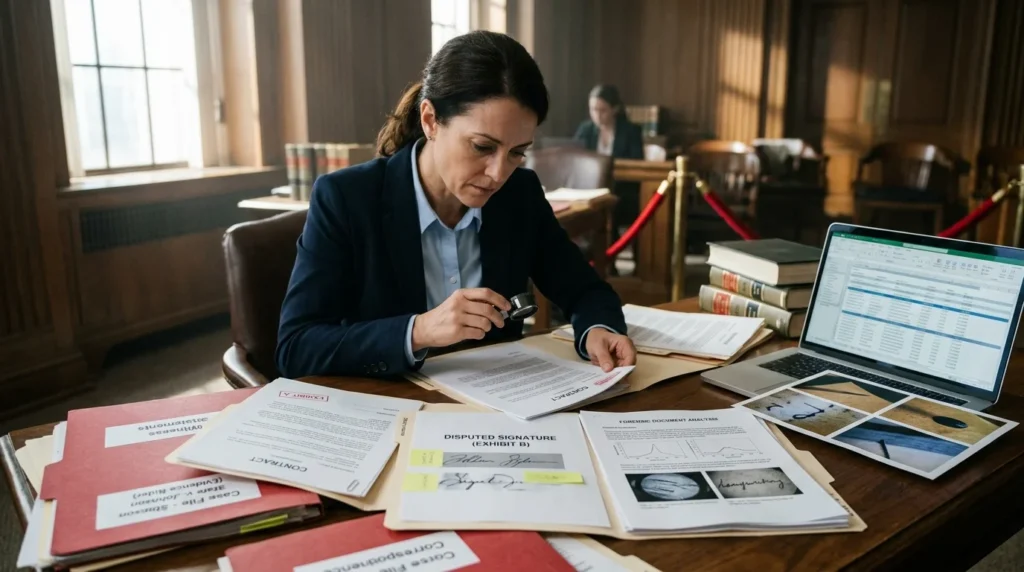
Copying a signature is not automatically the same as committing a crime in every situation. Permission and context can change the analysis.
An employee might sign a routine document under valid delegated authority. An artist might openly create a study in another artist’s style. A theater company might reproduce a historical document as a prop. None of those examples necessarily involves presenting a false item as genuine for deceptive purposes.
The situation changes when someone claims false authenticity to obtain money, property, medication, status, or another benefit. A fake certificate of authenticity used to sell art as genuine is a clear example of how misrepresentation changes the nature of an imitation.
This is why investigators look beyond handwriting. They may examine communications, financial transactions, access to original records, motives, authorization, and what happened after the false item was produced.
The Bottom Line
False documents matter because people, businesses, banks, courts, and institutions rely on the authenticity of records. The key questions are usually whether an item was falsely made or changed, whether the person had authority, and whether deception was intended.
If you encounter a suspicious record, preserve the original, verify it with the issuing source, keep related communications, and seek professional help when money, identity, property, or legal rights are involved. For more general legal reading, visit Watching Hub’s Law section.
Frequently Asked Questions
No. Classification depends on the jurisdiction, the document involved, the value or harm, the intent, and other circumstances. Some conduct may be prosecuted as a misdemeanor, while more serious cases may be prosecuted as felonies or as separate federal offenses. Never assume a penalty without checking the law that applies to the specific case.
Not in every circumstance. Authorization matters. A copied signature used with permission or for a non-deceptive purpose differs from an unauthorized signature presented as genuine. The specific document and local law also matter.
Potentially. Some laws separately prohibit knowingly using or presenting a false instrument. A person may face legal consequences for presenting a document while knowing or believing that it is false, even if someone else created it.
“Fake” is a broad, everyday term. A counterfeit is generally an unauthorized, fraudulent copy of something valuable, such as currency, documents, or branded goods. The exact legal terminology depends on the item and the jurisdiction.
Handwriting analysis can provide important evidence, but experts must consider the quality and limitations of the available material. Original documents and suitable comparison samples can be important. Forensic handwriting examination is a specialized process used to assess or question the authenticity of signatures.